
Call it love
Hello,
I am struggling to see the bright side. My brain is doing its thing and the world is scary and last week I found myself arguing with a prominent ‘left wing’ internet personality because he thought it wasn’t ableist to think it ‘made sense’ for someone with paralysis to want to and be helped to die. Honestly it is quite hard to feel cheerful in the present circumstances, really, isn’t it?
Still, there is some part of me that sees finding said bright side as an essential part of giving the said present circumstances the finger. If nothing else, defiance is very motivating.
So I decided to do something nice for the old brain and spent the weekend with Rebecca Solnit’s new book, The Beginning Comes After The End. Because sometimes you need someone else’s good writing and brilliant ideas to sort you out, you know? And I can always rely on Solnit, my favourite writer (or at least my favourite who isn’t one of my friends!), to ground me back into the things I already believe in when I lose my way.
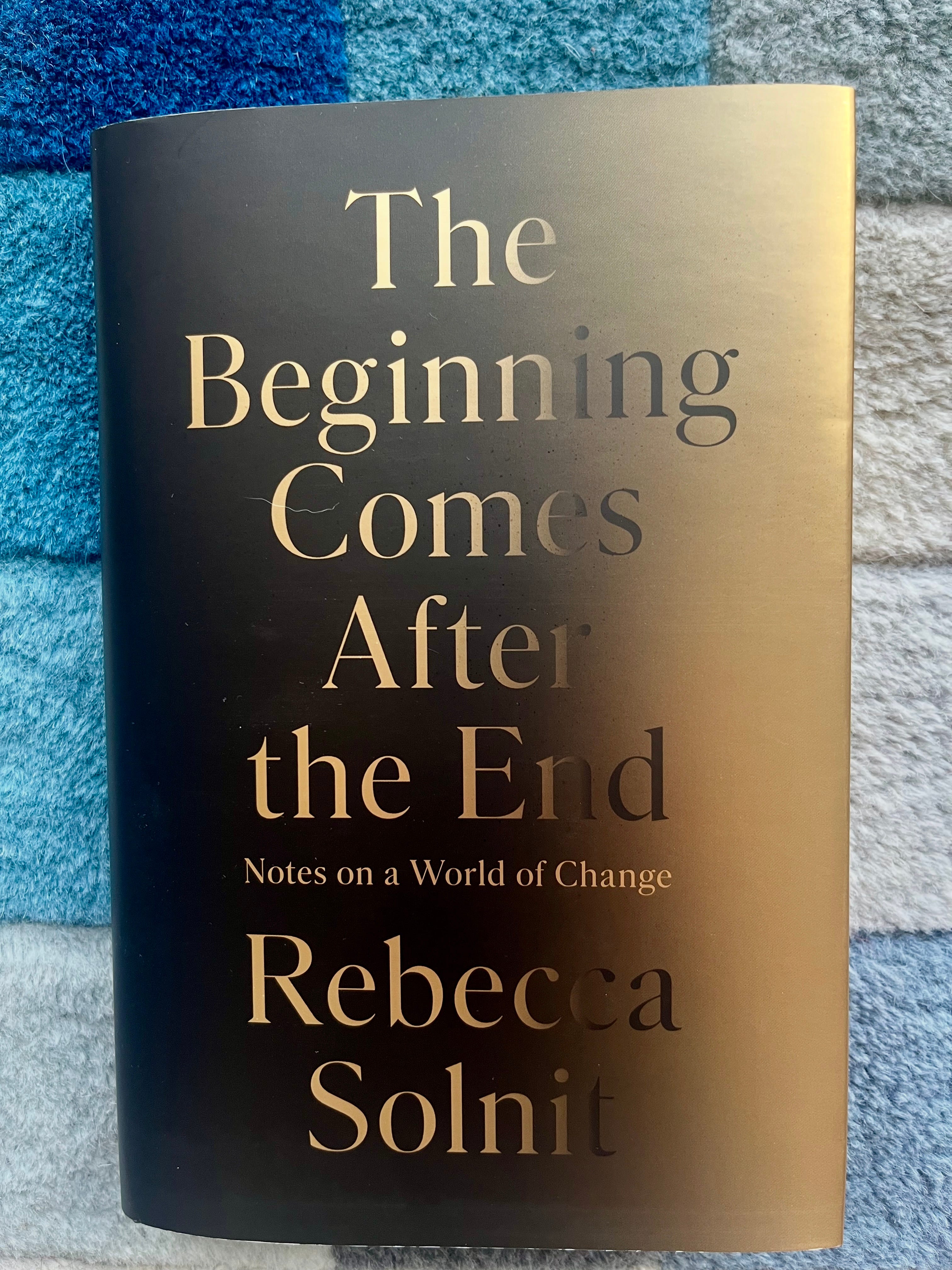
Partly, this is because of her resolute faith in the power of storytelling - of naming the problem, describing how it came to be, and working out with language how we make it better. She doesn’t claim that storytelling is the only thing needed in this moment (far from it, she engages in a lot of other activism), but she does assert that it is a vital component of doing good. And of course she’s right. Activism at its core is about persuasion, and we persuade through posing different narratives and shedding new light, by asking questions and supplying alternative answers - that is, by telling stories. Every single movement in history has needed its writers. I don’t know why I so often forget that.
It’s not just the writing though - it’s her whole world view. Solnit is one of the few writers/activists who manages to do what feels impossible: recognise the full gravity of this moment, look it dead in the eye, and meet it with a real, clarifying hope. As you know, I have a tricky relationship with the very notion of hope; I often find it cloying. But Solnit’s hope isn’t lofty or idealistic - it’s grounded in a deep understanding of history, in the knowledge that progress has never been linear or even necessarily visible, and in the understanding that if we take the long view we can be bowled over by how much better many, many things are now than those before us ever could have imagined.
Mostly, Solnit’s hope feels different because it’s rooted in solid things that I already believe in: community, solidarity. In the hard, tenacious work of helping each other. In embodying what I have started to think of as an ethic of care.
What she means by hope and what I mean by care are probably broadly the same thing. In a world that disempowers us by atomising us, caring for each other is what gives us back our power. Caring for each other is what motivates us to keep plugging away. And in the meantime, when the world can feel so awful, caring for each other - feeding each other, listening to each other, dancing with each other, metaphorically and literally holding each other’s hands - well, aren’t these the things that make life worth living?
All of which puts me in mind of something else I read recently, at the height of the ICE invasion of Minneapolis: all this rage you are feeling, call it love. My therapist said something remarkably similar last week: what if all this grief and fear is just love? These two sentences keep ricocheting around in my head this week. Because they don’t deny that the rage and grief and fear are real, or exist for extremely good reasons. They just serve to remind us that we only feel them, they only hurt as much as they do, because we care about other people, and ourselves.
It’s all just love. Let’s call it that.
Speak soon,
Luce
My book, The View From Down Here: On being disabled in an ableist world, is out now in paperback!
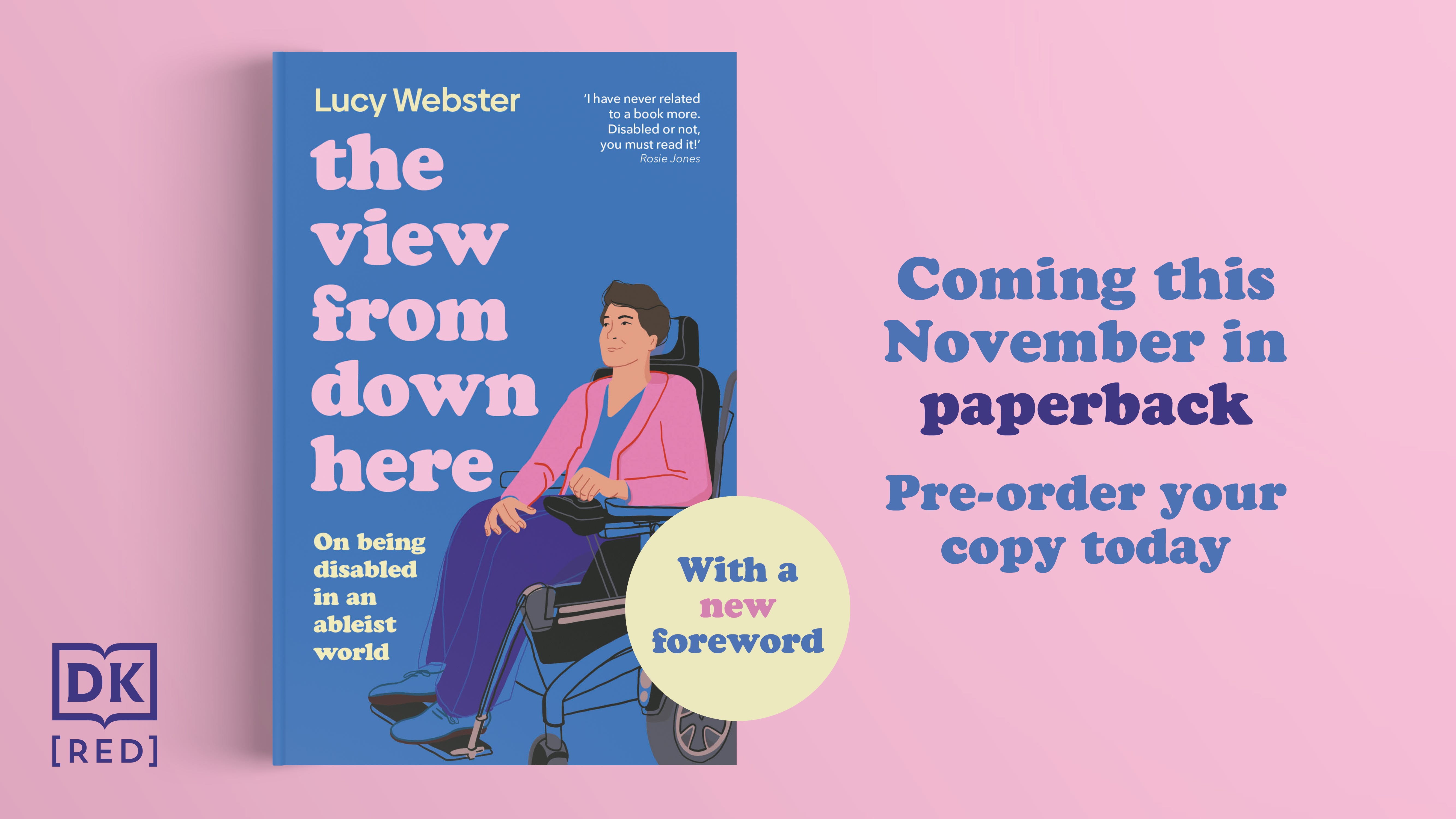
“A vital call to arms that demands we confront ableism at every level of society. Lucy Webster’s work is fierce, unapologetic, and essential - this is the blueprint for a world where all women belong.” - Sophie Morgan, TV presenter
“I have never related to a book more. Disabled or not, you must read it! Amazing. I love it.” - Rosie Jones, comedian
“A sharp, funny & deeply beautiful memoir that doesn’t shy away from the realities of disabled life and instead takes power from them.” - Ruth Madeley, actress
Thanks for sharing this Lucy. Reframing the rage as love feels so powerful.
Thanks Lucy, your post touched me! Your book is now bought as is Rebecca's.